
What makes a curved screen harder
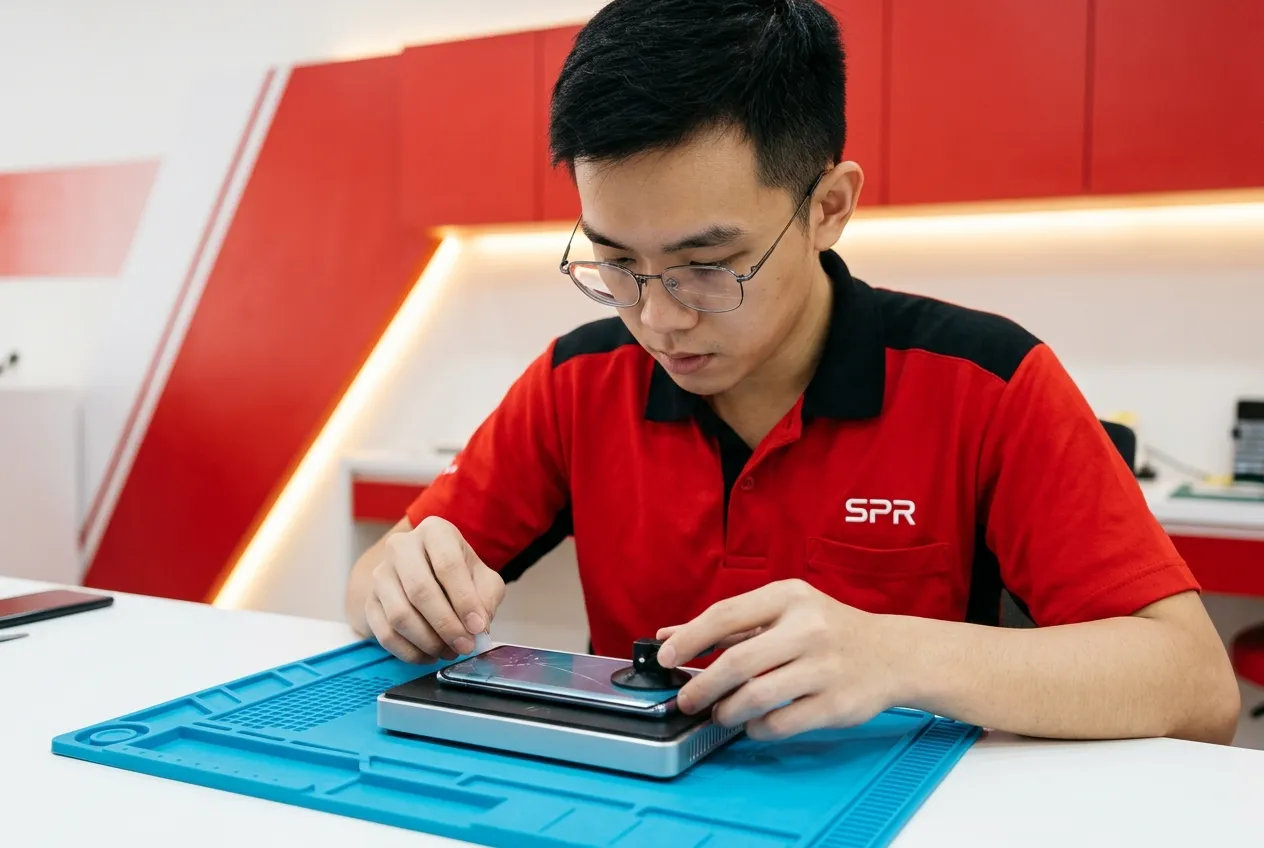
- The old screen is bonded along curved edges, so it has to be warmed and lifted slowly to avoid bending the frame.
- The new screen must seat exactly on the curve. If it sits even slightly high, the edges can lift later.
- Edge touch matters: swiping in from the side, the keyboard's outer keys and edge gestures all live on the curve.
Which phones have curved screens
Mostly flagships and upper mid-range: Samsung's older Galaxy S Ultra and Note models, and a number of Honor, Oppo Reno, Vivo V and Huawei P / Mate models. Several newer phones have gone back to flat screens, so tell us the exact model rather than guessing.
Options for a curved screen
The same six options apply, but fewer of them exist for curved models. TFT is rare for curved phones, and glass only is harder because the glass and display are bonded along the bend. Expect the realistic choice to be between Genuine, Original grade and an OLED grade.
What we check before you pay
- Touch along both curved edges, top to bottom.
- No lifting at the corners and no gap between screen and frame.
- Even colour on the curve — no tinted band along the sides.
- Fingerprint unlock, if your phone has it under the screen.
Send the model and a photo of the screen.
Prices depend on the model and the option, so we don't list them here. On WhatsApp we tell you which options exist for your phone and quote each one — free, and you decide before any work starts.
Free quote on WhatsApp